
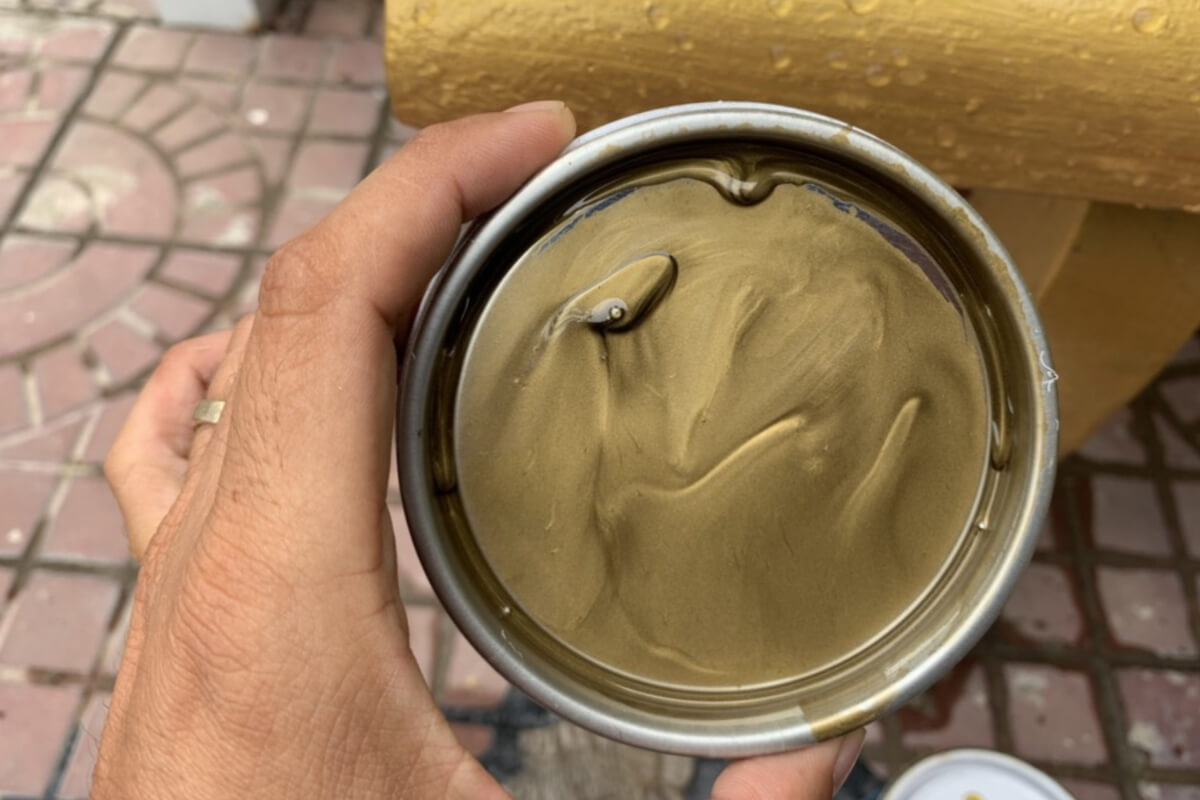
Bronze powder paint is a unique and luxurious type of coating widely used in both industrial and civil applications. Its special metallic shimmer makes it a preferred choice for those wanting to create standout and distinctive decorative effects on painted surfaces. However, to use bronze powder paint effectively and safely, users need proper knowledge and techniques.
In this article, we will introduce the advantages of bronze powder paint, including preparation steps and the painting process.
1. What Is Bronze Powder Paint?
Bronze powder paint, also known as bronze-effect zinc paint, is a premium metal coating based on acrylic resin and contains zinc along with a bronze metallic pigment. This type of paint is widely used in various industries, such as automotive coatings, machinery painting, and decorative objects. Zinc-based coatings provide a durable, abrasion-resistant, and rust-preventive layer, while the bronze shimmer offers an attractive decorative finish.
2. Outstanding Features of Bronze Powder Paint
Bronze zinc paint has many notable advantages, including:
-
Fast drying:
This allows users to save time during the painting process. -
High adhesion:
The coating adheres strongly to surfaces, maintaining color vibrancy and brightness for an extended period. -
Smooth glossy film:
The paint forms a smooth and shiny finish, enhancing the overall aesthetics of the coated object. -
Excellent color durability:
It withstands sunlight and is resistant to wear, helping the color remain stable over time. -
Non-yellowing (for white base):
The paint does not easily turn yellow or dull, ensuring a consistent and beautiful finish. -
No primer needed:
The product can be applied directly without a primer layer, saving users both time and cost.
Step 1: Materials Needed for Painting
-
1K antique bronze paint
-
2K antique bronze paint
-
Hardener (for 2K paint)
-
Solvent
-
Surface to be painted
-
Spray gun
-
Clean cloth
-
Cleaning solution
Step 2: How to Mix the Paint
-
For 1-component paint: Mix at a 4:1 ratio (4 parts paint : 1 part solvent).
-
For 2-component paint: Mix at a 4:1:1 ratio (4 paint : 1 hardener : 1 solvent).
Pour in order from base paint → hardener → solvent.
Mix thoroughly until the components completely blend together (you can visually confirm consistency).
Step 3: Spraying the Paint
-
Surface preparation:
Use a clean dry cloth (optionally with cleaning solution) to wipe off any oil, grease, or dust from the surface. -
Spraying:
Use a spray gun to apply the paint in even layers (usually 2 coats until the surface is uniform). -
Drying:
Allow the painted object to dry fully for 24–48 hours.
After 48 hours, the final finish will appear beautifully glossy, smooth, and richly colored.